Kettlebell vs. dumbbells: which fits your home workouts?
You don't need both kettlebells and dumbbells to start training at home. Think about the exercises you want to do, then buy the weight that fits them.
Sources last checked October 24, 2026.
Jump to a section
Which movements are in your routine?
Think about what you'd actually do with the weight. If your list is presses, rows, curls and split squats, we'd start with dumbbells. If you've been wanting to learn swings or follow a kettlebell program, a kettlebell has a clear purpose. There's plenty of overlap, though, so you don't need both immediately.
Try the weights you already own first. Then buy only for a movement or load they can't comfortably cover.
The handle changes how the weight behaves
A dumbbell places weight on either side of your hand. A kettlebell places its main mass below the handle. That difference affects how you hold it and how it moves around your hand during an exercise. It does not make one automatically better for getting stronger.
REP describes the balance and common uses of both tools. That supports the design comparison, but it is manufacturer guidance, not evidence that one produces better training results.
If possible, handle the style you are considering before ordering. Can you grip it comfortably? Does it leave room for both hands when you need that? Does the handle feel awkward against your wrist in the position you intend to use? Photos and overall weight do not answer those questions.
Sources: 1
Match the weight to the workout
On a small screen, swipe the table sideways.
| What you need | Dumbbells | Kettlebell |
|---|---|---|
| A mixed routine | Straightforward option for presses, rows, and smaller exercises | Can cover several lifts; the hold and balance differ |
| Kettlebell skills | Not a direct replacement for every kettlebell movement | Purposeful choice when these skills are the goal |
| More weight options | Adjustable pairs or several fixed pairs | Adjustable bell or multiple fixed bells |
| Before buying | Check both ends of the range and increments | Check handle, selected range, and permitted use |
Dumbbells are a sensible first purchase for a mixed routine
Dumbbells fit a lot of ordinary home routines without asking you to learn a new equipment style. You can use one at a time or a pair, and switching exercises often means changing the weight rather than changing the entire setup.
Check the increments before getting excited about the maximum load. The weight you can manage for a row may be much heavier than the weight you use for a shoulder exercise. A set that covers only your strongest movement can leave you short of options elsewhere.
Fixed pairs keep the process simple, but several pairs take up room. Adjustable dumbbells can reduce that storage problem. In exchange, you need to check how the adjustment works, whether the shape interferes with an exercise, and what the manufacturer allows you to do with the set.
If you already have one or two useful dumbbells, test your planned exercises with them before buying a matching set. You'll quickly learn whether the missing piece is a heavier weight, a lighter one, or simply a second dumbbell.
A kettlebell makes more sense when you want kettlebell training
A kettlebell is worth a look if the exercises themselves appeal to you. That might mean learning a controlled swing, practicing a particular kettlebell program, or using one weight for carries and goblet squats. Buy it because you want to use it, not because a short workout video promises an unusually fast transformation.
If you've never learned a hip hinge or swing, consider spending some money on qualified instruction before buying a second kettlebell. Those movements take practice. Keeping up with the speed of a video doesn't tell you whether you're doing them well.
One bell is compact to store, but dynamic movements need a clear working area. Think about furniture, pets, other people, and the space in front of you. A weight fitting under a desk does not mean every exercise with it fits beside that desk.
Avoid choosing a starting weight from a generic chart based only on sex or body size. Your experience, movement control, and intended exercises are more useful information. Try the movement with appropriate instruction before making an expensive guess.
An adjustable kettlebell solves one problem, with limits
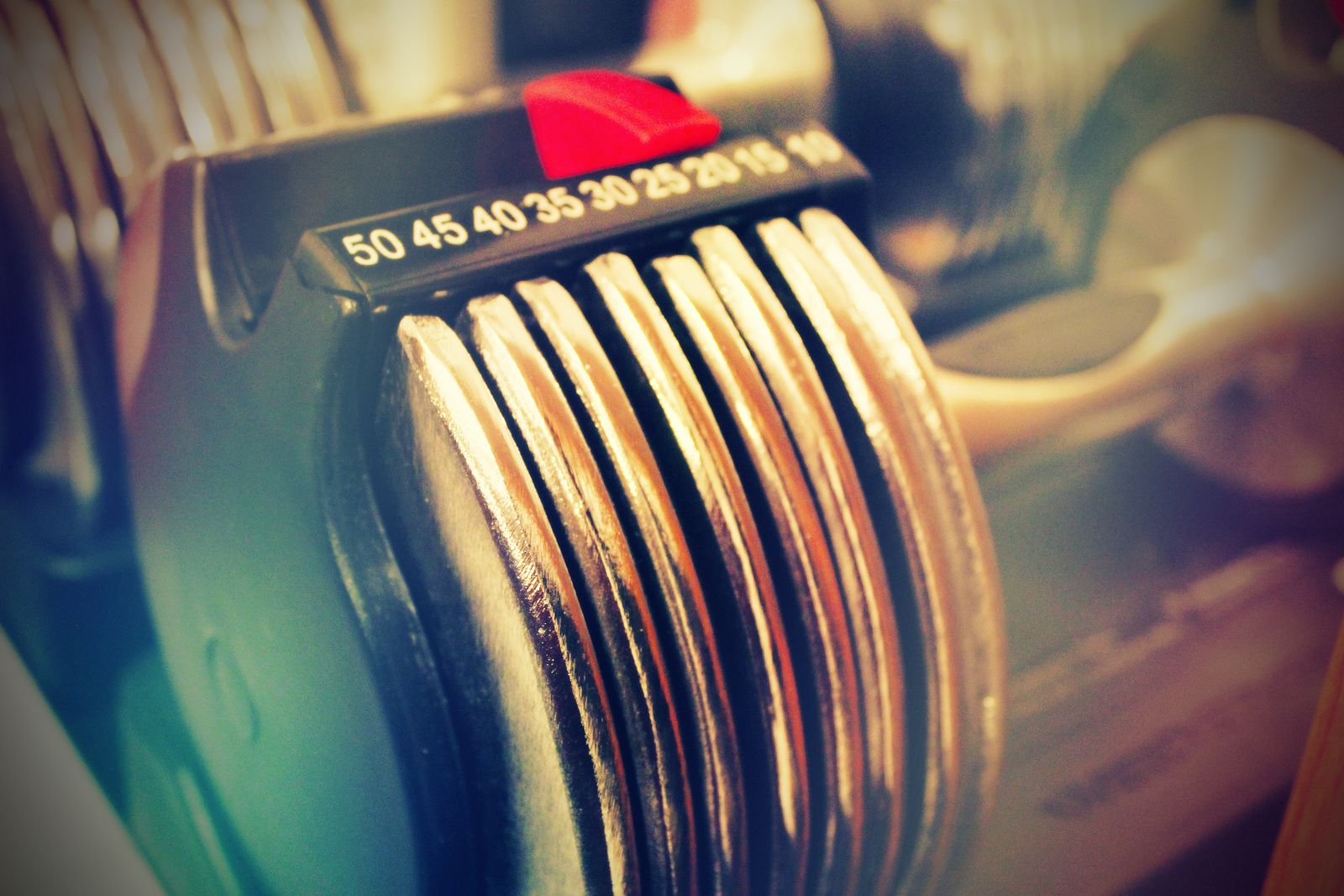
The REP Adjustable Kettlebell is one example if you want several loads without storing separate bells. Its 8–16 kg version has five settings: 8, 10, 12, 14, and 16 kg. REP also offers different ranges, so check the selected version rather than assuming every listing starts at the same weight.
REP says the adjustable model can be used for swings with its weights securely locked, but it must not be slammed or dropped. That restriction belongs in the buying decision. An adjustable mechanism is not permission to treat the bell like any solid weight you have seen in a gym.
Before ordering, compare the lowest setting with the lightest exercise you plan to do. Compare the highest setting with your stronger movements. If neither end suits you, combining several settings into one shell does not make it a good purchase.
The 8-to-10 kg step is a 25% increase; the 14-to-16 kg step is about 14%. Those percentages come from the listed settings, not a training test. The same 2 kg jump can be a bigger obstacle on a lighter exercise, so compare the next usable setting as well as the top weight.
Sources: 2
Compare complete setups rather than one price tag
A single kettlebell and a pair of adjustable dumbbells are different purchases. One gives you one implement with its listed range; the other gives you two. Comparing their headline prices alone can make the cheaper option look more useful than it is.
Make a short shopping list with three columns: exercises covered, useful loads, and storage needed. Include any instruction, stand, or floor protection you actually plan to buy. Then compare the total. You may find one modest purchase is enough.
When reading customer reviews, look for descriptions of the exact model and size. Handle comfort, adjustment behavior, and service experiences are questions worth investigating. A review saying the product is amazing tells you less than a clear account of what the owner does with it. We have not treated a pooled star rating as proof that either type is better.
Equipment choice does not have to delay training
ACSM’s 2026 guidance supports regular resistance training using several equipment approaches. You can begin with the tool that covers your exercises and fits the room, then add equipment when you reach a specific limitation.
Sources: 3
Equipment in this guide
Compare the exact model, included accessories, delivery, and return terms on the seller’s page.
These seller links are not currently affiliate links. How our links work. Prices, stock, and terms can change.
REP Adjustable Kettlebell
Choose it for: You want several kettlebell loads in one storage space and the selected range suits your exercises.
Check before ordering: The lightest version starts at 8 kg, and REP prohibits slamming or dropping it.
Check price & availabilityOpens repfitness.comA few more questions
Can I replace a kettlebell with a dumbbell?
For some controlled lifts, yes, with a suitable grip and technique. Do not assume the substitution works for every swing or other dynamic movement.
Is one kettlebell enough for a home gym?
It can cover part of a routine, but one fixed weight may be too light for some exercises and too heavy for others. Choose around your actual movements.
Should a beginner buy an adjustable kettlebell?
It can save storage if the range suits you. Check the lowest setting, locking instructions, and handling restrictions before choosing it.
Sources & research notes
Sources checked October 24, 2026.