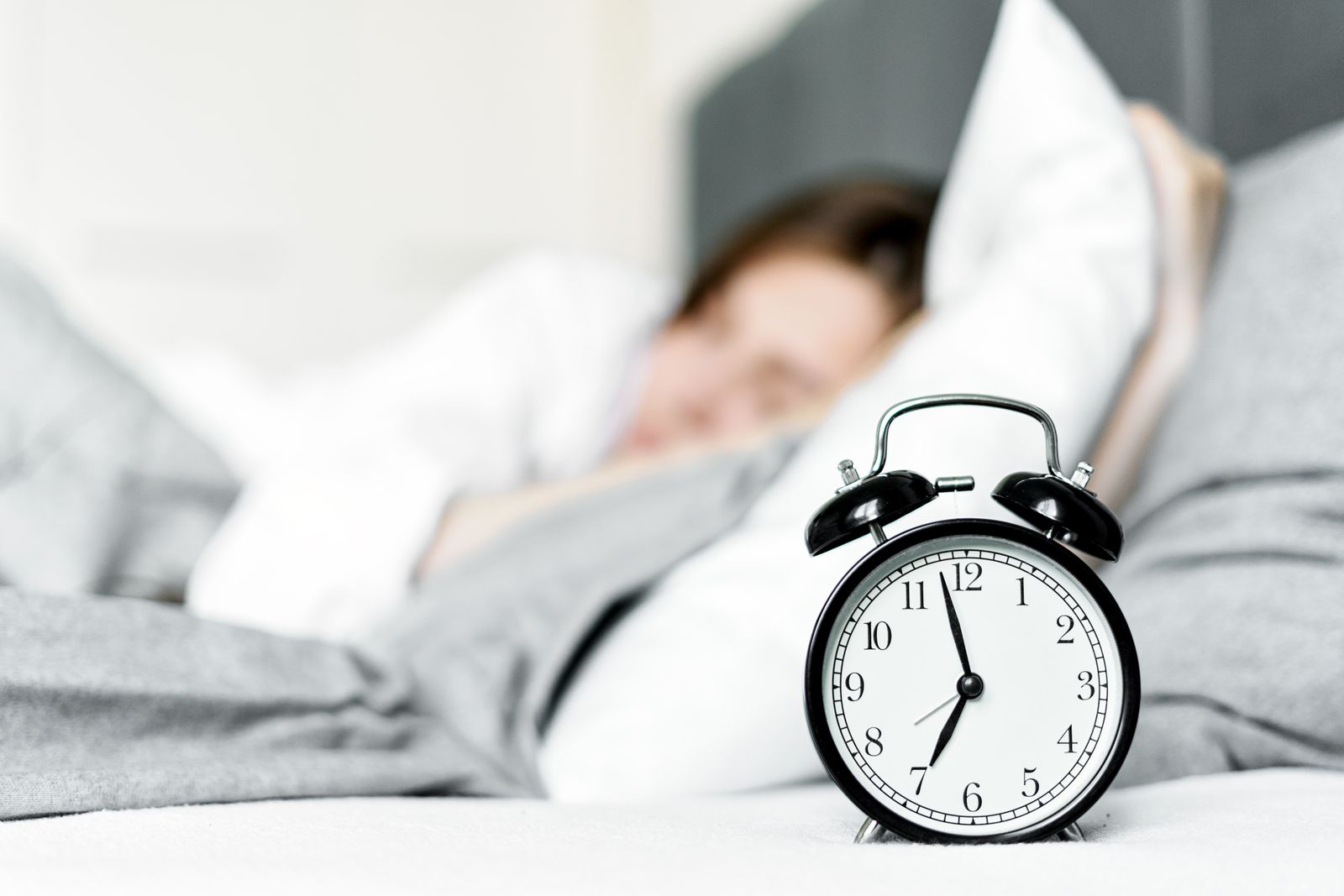
When should you stop drinking caffeine before bed?
Your bedtime matters. So does what is in the cup. Here’s a practical way to find a cutoff without pretending everyone handles caffeine the same way.
Sources last checked October 23, 2026.
General information, not individual medical or nutrition advice.

Jump to a section
Start with your bedtime, not a rule about 2 p.m.
If you go to bed at 10 p.m., an afternoon coffee and a morning coffee are different decisions. If you go to bed at 2 a.m., the same clock time means something else. Count backward from when you actually intend to sleep.
The National Heart, Lung, and Blood Institute notes that caffeine can affect sleep for up to eight hours. That makes an eight-hour gap a useful place to start if you suspect your later drinks are causing problems. It isn’t a guarantee that caffeine is gone, and isn’t proof that everybody needs that exact cutoff.
For a 10 p.m. bedtime, that starting point is 2 p.m. For midnight, it’s 4 p.m. If you take a large dose or remain sensitive after moving it earlier, the answer may be less caffeine, an earlier cutoff, or both. Buying a new pillow will not tell you whether your afternoon drink is part of the problem.
Sources: 1
Count milligrams, not just cups
“I only had one coffee” leaves out the most useful information. What size was it? How was it made? Was it followed by a pre-workout drink, tea, or an energy drink? Start with the label or the seller’s published caffeine information.
The FDA points out that caffeine content varies across products and serving sizes. It also notes that natural caffeine and added caffeine need to be counted together. Decaf usually contains a small amount, so it’s lower-caffeine rather than necessarily caffeine-free.
Imagine two routines. One person has a labeled 100 mg drink after lunch. Another has 200 mg after lunch and another 200 mg before an evening workout. Calling both routines “afternoon caffeine” hides a big difference. Write down the amount, when you start the drink, and when you finish it. Sipping something for three hours isn’t the same schedule as finishing it with breakfast.
Sources: 2
Count backward from your bedtime
On a small screen, swipe the table sideways.
| Usual bedtime | Eight hours before bed | How to use this |
|---|---|---|
| 10 p.m. | 2 p.m. | A starting point to try, not a guaranteed safe cutoff |
| 11 p.m. | 3 p.m. | Count all later caffeine sources |
| Midnight | 4 p.m. | Large doses or sensitivity may call for earlier timing |
What the dose-and-timing study actually found
A randomized crossover trial published in Sleep tested 100 mg and 400 mg doses at 12, eight, and four hours before bedtime in 23 men. The 100 mg dose did not produce statistically significant sleep changes at those tested times. The 400 mg dose affected sleep, with some effects appearing even at the 12-hour point and greater disruption closer to bed.
That doesn’t establish that 100 mg four hours before bed is harmless for you. It was a small study, in men, under particular conditions. It also did not test every dose or every possible pattern of drinking caffeine throughout the day.
The useful conclusion is narrower: timing advice should account for dose. The study also found differences between measured sleep disruption and what participants felt had happened. “I can fall asleep after coffee” doesn’t settle the whole question.
Sources: 3
Six hours is not a magic shield either
An earlier placebo-controlled study tested 400 mg at bedtime and three or six hours before bed. Sleep was disrupted even with the six-hour gap. This was another small study, so treat it as evidence that a substantial dose can matter, not a prediction that your own sleep will change by exactly the same amount.
The studies are useful because they challenge an easy assumption: that caffeine stops mattering once you stop feeling buzzed. They don’t give a precise countdown for your body. If you want a universal minute when a drink becomes “safe for sleep,” the evidence doesn’t provide one.
Be especially careful with advice that turns a daily intake number into a bedtime rule. The FDA’s widely quoted 400 mg figure describes an amount not generally associated with negative effects for most adults. It isn’t a promise that 400 mg will leave your sleep untouched.
Try a change you can actually learn from
Keep a short record for a few ordinary days before changing anything. Note your caffeine amounts and finishing times, approximate bedtime, how long you think you stayed awake, obvious awakenings, and how you felt the next morning. A simple note on your phone is enough.
Next, move the final drink earlier while keeping the rest of your routine reasonably steady. Give the change several comparable nights instead of judging it after one unusually stressful Tuesday. This is a practical personal experiment, not a medical test or a substitute for a sleep study.
Changing caffeine, bedding, supplements, and bedtime together makes it hard to tell what helped. Start with one manageable change. If cutting back causes headaches, reduce gradually; the FDA recommends this approach for regular caffeine users.
Sources: 2
Keep the ritual if that is the part you enjoy
Sometimes the drink is doing two jobs. There’s the caffeine, and there’s the break, taste, warmth, or routine. You may want the afternoon pause without needing the same stimulant dose.
Possible swaps include a smaller serving, a lower-caffeine version, or a caffeine-free drink you actually like. Check the label rather than assuming a tea, supplement, or “natural energy” product has no caffeine. The best replacement is one you’d willingly choose again tomorrow.
Moving a drink earlier requires no wearable or supplement. Keep the experiment simple enough to see whether the change helps.
Do not buy a sleep supplement to cancel out late caffeine. Change the caffeine pattern first.
When caffeine is not the whole answer
If an earlier cutoff makes little difference, don’t keep blaming yourself or endlessly moving the deadline. Noise, light, an inconsistent schedule, stress, medications, and sleep disorders can all deserve attention. A diary is useful information to bring to a clinician if the problem continues.
If you’re regularly very sleepy during the day, having persistent trouble sleeping, or your partner notices breathing pauses, seek medical advice rather than treating it as a shopping problem. The NHLBI describes medical history and, when needed, sleep testing as parts of evaluating sleep difficulties.
Sources: 5
A few more questions
Is a 2 p.m. caffeine cutoff right for everyone?
No. It depends on your bedtime, dose, and response. Count backward from your actual bedtime instead of treating 2 p.m. as a universal rule.
Does falling asleep easily prove caffeine is not affecting me?
No. Falling asleep is only one part of sleep. Trials have found differences between measured disruption and what participants noticed.
Sources & research notes
Sources checked October 23, 2026.
- NHLBI: healthy sleep habits and caffeine timing (opens in new tab)
- FDA: caffeine amounts, sensitivity, decaf, and gradual reduction (opens in new tab)
- Gardiner et al.: randomized trial of caffeine dose and timing, Sleep (2025) (opens in new tab)
- Drake et al.: caffeine at zero, three, or six hours before bedtime (2013) (opens in new tab)
- NHLBI: evaluating sleep deprivation and deficiency (opens in new tab)