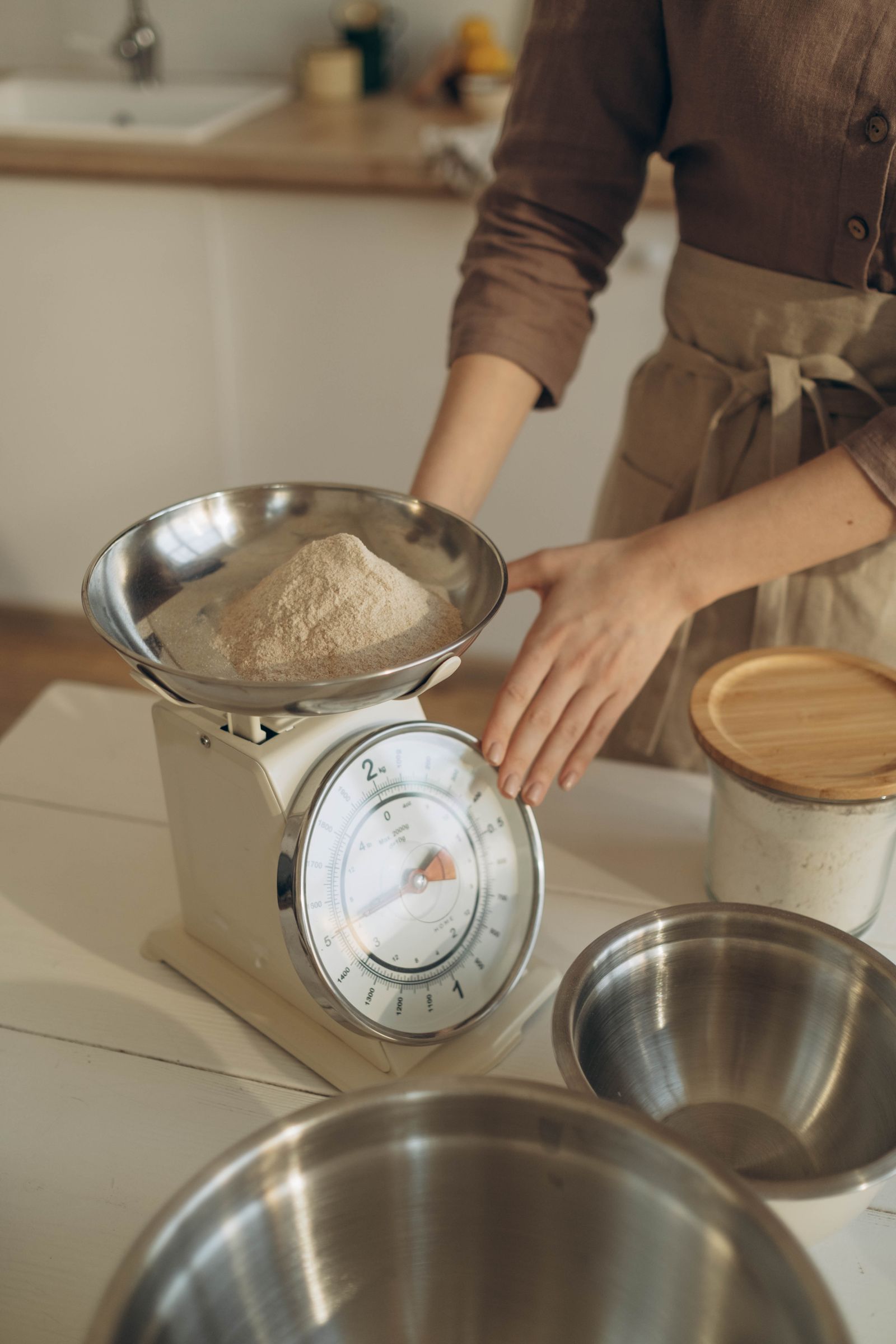
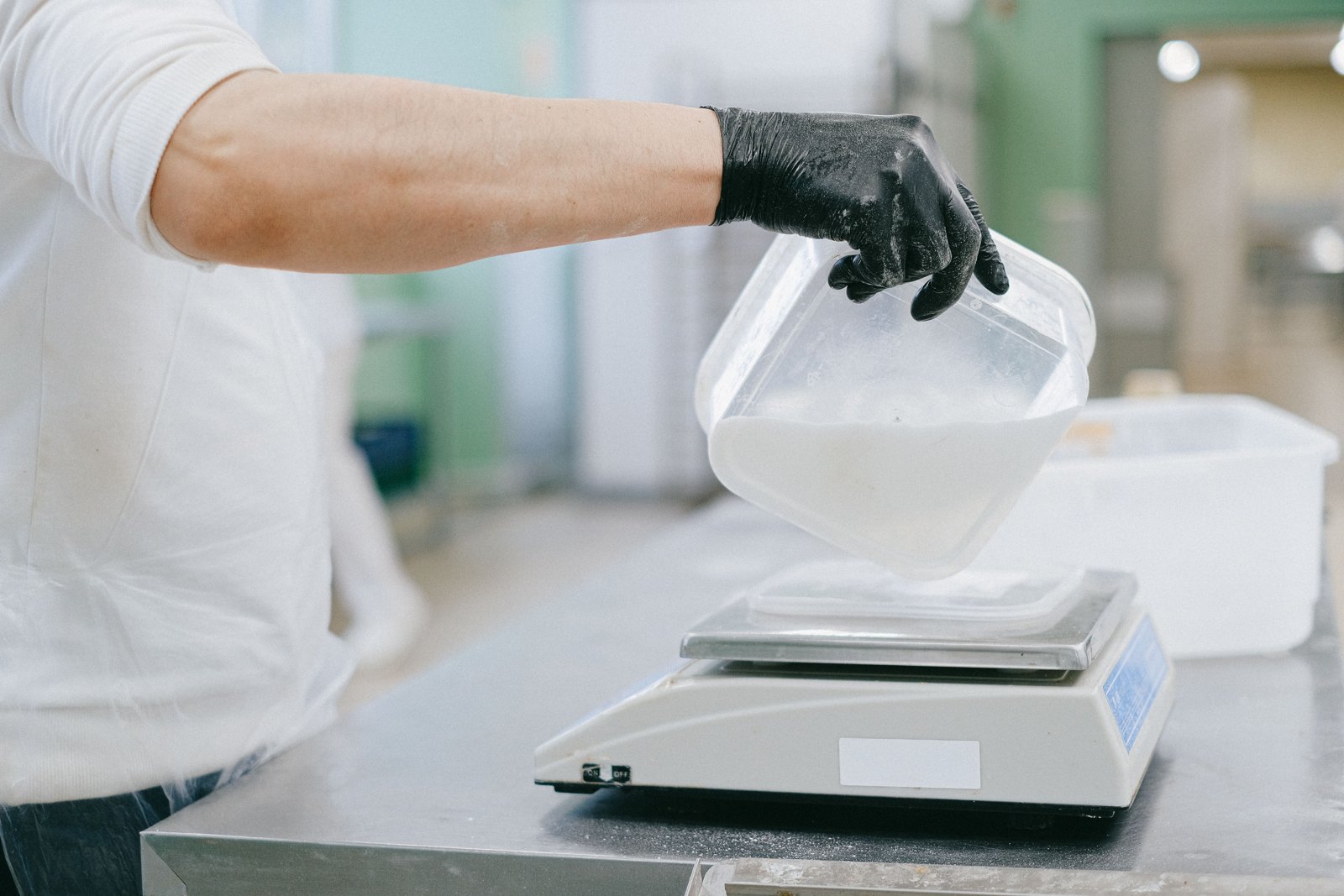
Kitchen Scale Not Reading 1–2 Grams? Check This First
Before you order a replacement, check what your scale can actually measure, and what that extra decimal place does not tell you.
We may earn a commission from qualifying purchases through these links. As an Amazon Associate I earn from qualifying purchases. Amazon prices are shown on Amazon; dated prices from other retailers are not Amazon quotes. How our links work. Prices, stock, and terms can change.
Sources last checked November 8, 2026.
Jump to a section
Give your current scale a fair chance
Your recipe calls for 1.5 grams of yeast. A little goes into the dish. The display stays at zero. You add some more, and suddenly you're wondering how much is already in there.
Put the yeast down for a moment. Adding more until a number appears won't tell you whether you've measured the amount the recipe needs.
You may not need to replace it. Before shopping, work through these checks using your model's instructions:
- Read the unit beside the number. Select grams rather than ounces or a liquid-volume setting. You want to compare the display with the unit used in the recipe.
- Set up on a level, steady counter. Remove anything underneath that makes the scale rock, and make sure your dish isn't resting partly on something beside the weighing platform.
- Start again with the empty dish. Follow the scale's power-on and zeroing procedure, then add the ingredient without leaning on the dish. Don't assume the previous reading has cleared.
- Check warnings and the stated weighing range. Follow the manual for a low-battery message or other error. If the requested quantity is below the model's specified range, repeating the same measurement doesn't resolve that limitation.
A level counter can help with inconsistent readings, and fresh batteries can resolve some power problems. They won't give a scale a measuring capability it never had. Escali covers those basic checks in its Passo troubleshooting guide; use your own model's instructions for its limits.
If your recipe gives a spoon measurement as well as grams, its own spoon method may be the simplest option today. Don't invent a teaspoon conversion from a different ingredient just to finish the batch.
Sources: 4
The three numbers that matter for a little yeast
A listing might emphasize “0.1 g” and leave the rest buried. Here's how to read it:
- Display increment: which numbers can appear? A 0.1-gram step allows readings such as 1.4, 1.5 and 1.6 grams. It describes the display's resolution.
- Lower weighing limit: where does the specified range begin? This tells you whether the amount you need even falls within the manufacturer's published range. It is not automatically the same as the display increment.
- Accuracy: how close is the reading to the actual weight? That needs its own specification or suitable testing. Neither an extra decimal place nor a higher price proves it.
There is a useful real-world distinction here. OXO lists measurements beginning at 0.5 gram for its precision model. Hario's published table begins at 2 grams, even though it also includes 0.1-gram display steps. Those aren't interchangeable descriptions of a 1.5-gram job. That table alone doesn't establish how a 1.5 g addition behaves after you tare a heavier dish.
Three models, with the small print beside the price
Manufacturer-published details checked November 8, 2026
On a small screen, swipe the table sideways.
| Exact product | US listed price | Useful specification | Before choosing it |
|---|---|---|---|
| OXO 6-lb Precision Scale With Timer | $64.99 | Measurements start at 0.5 g, with 0.1 g display intervals. | Best-documented candidate of these three for the 1.5 g example, not an independently tested accuracy winner. |
| Hario V60 Drip Scale, VSTN-2000B | $60.00 | Published display bands: 2–200 g in 0.1 g steps; 200–500 g in 0.5 g steps; 500–2,000 g in 1 g steps. | Do not buy specifically for a sub-2 g ingredient on the strength of the “0.1 g” description. |
| Escali Pico PR500S | $54.95 | 500 g capacity; 0.1 g increments; the listing specifies a maximum tare of 50 g. | Minimum supported ingredient weight wasn't stated in the listing reviewed. A heavier dish also needs an answer before purchase. |
Check Hario's current availability on Amazon before ordering; this price snapshot does not guarantee availability.
The OXO here is a different product from the 11-pound pull-out-display model in our Ozeri and OXO comparison. Don't accidentally order the familiar-looking name instead of the precision model.
For 1.5 grams, where would I start?
I'd shortlist the OXO precision scale first. The target falls above its stated starting point, and the display can represent the amount. That's a concrete reason to consider it. It is not a promise of laboratory accuracy or a claim that we tried it with yeast.
I'd leave the Hario off a sub-2-gram shopping list unless Hario confirms the exact use. Its coffee-oriented feature set may suit another job; it doesn't remove the question raised by the published lower range.
The Pico's compact size could be appealing, but I'd settle its minimum load and dish restriction before spending the money. For example, a 70-gram ramekin would exceed the listed 50-gram tare limit. That's a hypothetical container, not something we weighed during a test.
For a recipe that needs less than 0.5 gram, none of these listings gives us enough evidence to make a recommendation here. This is a three-model comparison, not a claim that no suitable product exists elsewhere.
Why half a gram can matter more than it sounds
Imagine that the recipe asks for 1.5 grams and you actually add 2 grams. The extra half gram is one-third of the intended amount.
The same hypothetical 0.5 g addition, at three different targets
On a small screen, swipe the table sideways.
| Recipe target | Extra amount | Increase over target |
|---|---|---|
| 1.5 g | 0.5 g | 33.3% |
| 5 g | 0.5 g | 10% |
| 500 g | 0.5 g | 0.1% |
Our calculation is extra weight divided by target weight, multiplied by 100. These are illustrative amounts, not measured scale errors, rounding specifications or predictions about the finished recipe.
That's why “it works well for flour” doesn't completely answer your yeast question. The smallest portion you regularly measure deserves its own place on the shopping list.
Tell support about the dish, too
A useful question is more specific than “Is this scale precise?” Try this:
My recipe uses 1.5 grams of yeast. I want to zero an empty dish, then weigh that amount inside it. Does this model support that measurement, and what tolerance applies? The empty dish weighs ___ grams.
That gives the manufacturer a real situation to answer. It also avoids guessing whether a model's weighing bands or tare restrictions change what happens once a container is on the platform.
Before ordering, check the power supply, cleaning instructions, delivered price and return conditions for a scale you have opened and used with food.
Keep your existing scale if it's still useful for the larger ingredients. A small second unit can fill a different role; it doesn't have to make the first one obsolete. Our everyday kitchen-scale guide covers that broader decision.
Choose around the amount you need to measure, not the most impressive-looking screen. Getting a clear answer about 1.5 grams is more valuable than buying another scale and having the same conversation with it tomorrow.
We may earn a commission from qualifying purchases through these links. As an Amazon Associate I earn from qualifying purchases. Amazon prices are shown on Amazon; dated prices from other retailers are not Amazon quotes. How our links work. Prices, stock, and terms can change.
Sources & research notes
Sources checked November 8, 2026. We compared manufacturer-published information, not physical scale tests. US price snapshots exclude tax and delivery and do not guarantee stock. We did not perform calibration, repeatability or hands-on food tests. We could not retrieve Hario's linked PDF manual, so its published product table is the source for the weighing bands.
- OXO: 6-lb Precision Scale With Timer, listed price, measurement starting point, display intervals, tare and rated capacity. (opens in new tab)
- Hario USA: V60 Drip Scale, VSTN-2000B, model, price and published display bands. The linked PDF manual could not be retrieved during this review; no additional manual-only behavior is asserted. (opens in new tab)
- KitchenSupply / Escali: Pico PR500S, listed price, increments, capacity and 50 g tare restriction. (opens in new tab)
- Escali support: Passo troubleshooting, an example of manufacturer setup and battery advice, not specifications for the comparison models. (opens in new tab)