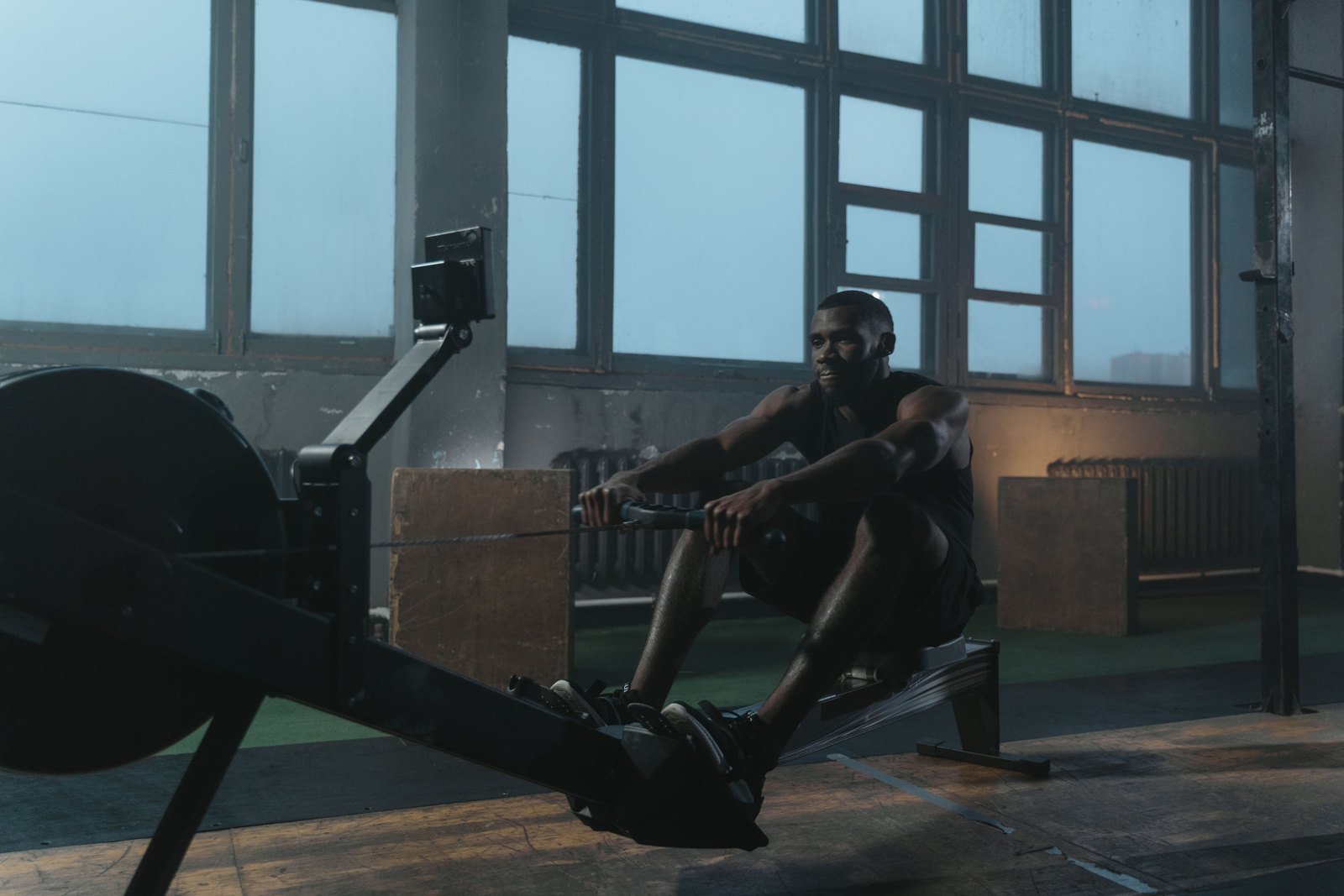
Concept2 RowErg Standard vs. Tall Legs: Is the Higher Seat Worth It?
The 20-inch seat costs more, but it doesn't give you more legroom. Here's how to decide whether the extra height is worth paying for.
We may earn a commission from qualifying purchases through these links. As an Amazon Associate I earn from qualifying purchases. Amazon prices are shown on Amazon; dated prices from other retailers are not Amazon quotes. How our links work. Prices, stock, and terms can change.
Sources last checked November 15, 2026.
There's an easy mistake to make when comparing Concept2's two RowErg configurations: assuming the tall version is designed for tall people.
It isn't.
The standard RowErg has a seat 14 inches above the floor. The tall version raises that seat to 20 inches. Both use the same 54-inch monorail and accommodate inseams up to approximately 38 inches, according to Concept2.
So if you're six feet tall, that alone isn't a reason to pay for the taller machine.
The real question is whether you're comfortable lowering yourself onto a 14-inch seat and standing back up after a workout.
Our recommendation: Start with the standard-leg RowErg if its lower seat is comfortable and accessible for you. You get the same core rowing equipment, monitor, and usable legroom while spending less.
The tall version becomes worth considering when getting onto and off the lower seat is an inconvenience you expect to encounter every workout. It's a meaningful ergonomic preference, but not an automatic upgrade for everyone.
Before choosing, there are two other details worth checking: the tall machine takes up more room when separated for storage, and buying the standard model with plans to convert it later can cost more.
Concept2 RowErg standard vs. tall legs: specifications
These are the current RowErg configurations, not a comparison between two discontinued generations of Concept2 rowers.
On a small screen, swipe the table sideways.
| Specification | Standard legs | Tall legs |
|---|---|---|
| Seat height | 14 inches | 20 inches |
| Height difference | Baseline | 6 inches higher |
| Monorail length | 54 inches | 54 inches |
| Published inseam accommodation | Up to approximately 38 inches | Up to approximately 38 inches |
| Performance monitor | PM5 included | PM5 included |
| Resistance | Air flywheel | Air flywheel |
| Assembled length | 96 inches | 96 inches |
| Assembled width | 24 inches | 24 inches |
| Recommended space during use | 9 × 4 feet | 9 × 4 feet |
| Published separated-storage dimensions | 25 × 33 × 54 inches | 27 × 47 × 54 inches |
| Machine weight | 57 pounds | 68 pounds |
| Front transport wheels | Casters | Larger casters |
| Manufacturer-listed machine price, Nov. 15, 2026 | $990 | $1,155 |
| Listed shipping to the lower 48 states | $55 | $85 |
| Total before tax at those rates | $1,045 | $1,240 |
Sources: Concept2 RowErg specifications, official RowErg product page, and Concept2 shipping rates. Storage dimensions are reproduced in Concept2's published order without assigning unverified axis labels. Prices are manufacturer-direct observations, not live checkout quotes.
Six inches higher doesn't mean six inches more legroom
This is the distinction we would settle before looking at anything else.
On both machines, you're sitting on a sliding seat and driving through the same rowing mechanism. The taller legs raise the assembly off the floor, but they don't lengthen the rail.
Concept2's specifications give both versions a 54-inch monorail.
That means a person with long legs doesn't automatically gain a longer rowing stroke by choosing tall legs.
Concept2 says both configurations accommodate inseams up to approximately 38 inches. Its detailed specifications also caution that users with inseams of 38 inches or more may need an extra-long monorail.
Those statements aren't contradictory. They tell us that 38 inches is near the published fit boundary, not a measurement to treat as an unconditional guarantee.
If you're near that limit:
- Measure your inseam, not just your standing height.
- Contact Concept2 about rail length before ordering.
- Ask whether the standard monorail gives you adequate travel or whether an extra-long version is appropriate.
- Don't buy the 20-inch seat expecting it to fix insufficient rail travel.
A tall person's inseam matters far more than their overall height for this particular fit question.
Concept2's explanation of the two leg options explicitly separates user height from the seat-height decision.
Who actually benefits from the 20-inch seat?
Think about the moment before your workout starts.
With the standard configuration, you lower yourself onto a seat 14 inches off the floor. Once you've finished rowing, you have to rise from that same low position.
The tall configuration puts the seat 20 inches above the floor, closer to the height of some ordinary chairs.
For someone who finds that lower movement awkward, the difference could matter every day.
Concept2 identifies easier entry and exit as a reason people choose tall legs. But that doesn't mean everyone with knee discomfort or limited mobility will find the higher version comfortable or appropriate.
The safest way to make this decision is to try the equipment if you can.
A useful test at a gym, showroom, or other facility is to:
- Sit down and stand up from the 14-inch RowErg a few times, without rushing.
- Pay attention to whether you can do it comfortably after a workout, not only when you're fresh.
- Try the 20-inch version if one is available.
- Consider how easily you can reach the footrests and settle into position.
Don't judge the experience solely by a ruler. A 14-inch household chair can give you a rough sense of how low the seat is, but a stationary chair doesn't reproduce the sliding seat, frame, or entry position of a rowing machine.
If balance, pain, or mobility makes personal fit uncertain, getting individualized guidance and trying the actual equipment is more reliable than guessing from the specifications.
Are you getting a better rowing machine with tall legs?
Not in the sense of buying a more advanced monitor or a longer rowing mechanism.
Concept2 describes the current RowErg as one machine offered with two leg-height choices.
Both versions include:
- The PM5 performance monitor.
- The same published monorail length.
- Air-flywheel resistance.
- A device holder.
- A chain-driven rowing mechanism.
The PM5 uses two D-cell batteries and draws additional power from the spinning flywheel during rowing. Neither leg configuration requires a wall outlet for an ordinary session.
The construction does change.
Concept2 lists aluminum front legs and steel rear legs for the standard version, compared with steel front and rear legs for the taller version. The tall configuration also has larger front caster wheels.
That's part of why the machines have different published weights.
What we can't responsibly claim without controlled testing is that the two versions feel perfectly identical in every physical detail. But Concept2 does not present the tall legs as a performance upgrade, and its published differences do not establish superior rowing results.
If you're paying extra for the tall model, know what you're buying: a higher seat and the accompanying frame configuration, not a better PM5 or extra travel for long legs.
Check the room twice: once for rowing, once for storage
The assembled footprint doesn't change between configurations.
Both RowErgs measure 96 inches long and 24 inches wide, or 8 feet by 2 feet.
But that is not all the room you need.
Concept2 recommends a 9-by-4-foot area during use. The additional clearance allows room around the machine, including space to get on and off.
Here's a practical way to check your room:
- Mark a rectangle 9 feet long and 4 feet wide with painter's tape.
- Position it where you would actually row.
- Check doors, desks, furniture, and the path you'll use to enter and exit the machine.
- Consider whether anyone else needs to move through the space while you're exercising.
Now measure where you'll put the RowErg after the workout.
Both configurations separate into two pieces without tools, which is different from folding into one compact unit. If you're considering standing a rower on end, check the model-specific upright-storage instructions first.
Concept2 publishes the following separated-storage dimensions:
On a small screen, swipe the table sideways.
| Configuration | Manufacturer's separated-storage dimensions |
|---|---|
| Standard legs | 25 × 33 × 54 inches |
| Tall legs | 27 × 47 × 54 inches |
The tall model requires more space in its published separated-storage configuration.
That may not matter if your rower stays assembled in a dedicated workout room. It matters considerably more if you expect to separate it after every session and put it in a closet or corner.
Measure the actual storage spot, including ceiling clearance, shelving, and the route for moving the pieces.
Don't assume that because both machines separate the same way, they occupy identical storage space.
What if you move the rower every day?
Both RowErgs have caster wheels for repositioning the machine.
The tall configuration has larger front caster wheels, which Concept2 identifies as an added mobility feature.
But the taller machine also weighs more:
- Standard legs: 57 pounds.
- Tall legs: 68 pounds.
That is an 11-pound difference in the published machine weights.
You shouldn't translate that directly into a claim that one machine is always easier to move. Rolling a rower, carrying its separated sections, and navigating a doorway are different activities.
Consider your actual routine.
If you'll roll the machine a short distance across an open floor, the caster arrangement may be more important to you than the total weight.
If you'll regularly lift or maneuver separated sections through a tight space, the additional weight and larger storage dimensions deserve attention.
Both versions require some initial assembly. Concept2 supplies assembly instructions and tools. Separating the rower later for storage is a separate, tool-free process.
A machine that fits beautifully in a product photo but takes ten frustrating minutes to retrieve isn't especially convenient.
The real price difference: buying tall now versus upgrading later
Here's where the purchase decision becomes more interesting.
Concept2's U.S. manufacturer-listed prices checked November 15, 2026 were:
- Standard RowErg: $990.
- Tall RowErg: $1,155.
The machine-price difference is $165.
For shipment to the lower 48 states, Concept2 listed $55 shipping for the standard configuration and $85 for the tall configuration.
So the comparison before applicable taxes is:
On a small screen, swipe the table sideways.
| Purchase route | Equipment | Shipping | Total before tax |
|---|---|---|---|
| Buy standard now | $990 | $55 | $1,045 |
| Buy tall now | $1,155 | $85 | $1,240 |
| Buy standard, then retrofit later | $990 + $225 kit | $55 + $30 | $1,300 |
Manufacturer-direct prices and published lower-48 shipping rates checked November 15, 2026. These are calculated examples, not Amazon prices or guarantees of your final checkout total. Sales tax, future price changes, and any different delivery services can change the amount.
Why the retrofit route costs more
Concept2 sells a Tall Legs Retrofit Kit, part number 2396.
The kit includes replacement front and rear legs that raise a standard RowErg's seat from 14 inches to 20 inches. Concept2 says they're the same legs used on the factory tall version, and the kit includes the required installation components.
The listed kit price was $225, with another $30 in lower-48 shipping when ordered separately.
That makes the later conversion cost $255 before tax, in addition to what you've already paid for the standard machine.
Compare that with the $195 delivered-price premium for buying tall legs upfront.
Under these published prices, buying standard and later converting it would cost $60 more than purchasing the tall configuration from the beginning.
There is also the installation to consider.
When paying that extra $60 might still make sense
Suppose you aren't sure whether you'll like the lower seat.
Buying standard now gives you the chance to use the less expensive configuration before deciding whether you want to spend more.
If the standard seat works, you never need to buy the kit. You've saved the $195 upfront difference.
If you discover you'd strongly prefer the higher seat, the conversion option exists, although it costs more overall than choosing tall at the start.
That flexibility has value.
What doesn't make much sense is buying standard with a firm intention to install tall legs immediately. Unless your actual purchase offers change the numbers, you'd be paying more and doing extra installation work to reach the same basic configuration.
For someone who already owns a standard RowErg, the calculation is different. The original machine purchase is a past expense. The question becomes whether the current kit cost is worthwhile compared with continuing to use the existing machine or replacing it.
One more cost worth checking: returns
An uncertain seat fit is a good reason to read the seller's return terms before buying.
Concept2's factory-direct U.S. and Canadian policy allows returns within 30 days of shipment for a refund of the goods' cost, subject to its terms. Customers are responsible for shipping costs, and Concept2 asks customers to call before returning.
It also recommends retaining the original packaging for machine returns.
That makes a try-before-you-buy visit especially useful if you're unsure which seat height suits you.
Do not assume purchases from Amazon or other retailers have the same return terms as factory-direct Concept2 orders.
Read the terms for the actual seller you choose.
Your five-minute RowErg buying worksheet
Before spending money, work through these six questions.
On a small screen, swipe the table sideways.
| Your check | What to do | What the answer means |
|---|---|---|
| 14-inch seat access | Try sitting and standing from the standard RowErg if possible | If comfortable, the standard version may be all you need |
| 20-inch seat benefit | Try the taller configuration when available | Pay extra if the higher access makes a meaningful difference to you |
| Inseam | Measure inseam, especially if near 38 inches | Contact Concept2 about the monorail if you're at or beyond the published boundary |
| Exercise space | Mark a 9 × 4-foot rectangle | Both configurations need that recommended operating area |
| Storage routine | Compare separated dimensions with your storage spot | Tall legs need more room in Concept2's published storage configuration |
| Actual delivered cost | Compare machine, delivery, tax, and possible retrofit costs | Buying tall upfront generally costs less than converting later under the checked direct-purchase prices |
There's one more question that's easy to overlook: Who else will use the rower?
If several people share it, the most important seat-height preference might belong to someone other than the person purchasing it.
Both users' inseams and ability to get on and off comfortably deserve consideration.
So, is the 20-inch seat worth it?
For a shopper who finds the 14-inch seat comfortable, we'd keep the extra money and buy the standard configuration.
The higher machine doesn't add the longer rail a tall rower might need, and it doesn't unlock a more capable monitor.
If the lower seat makes getting started or standing up awkward, the 20-inch configuration is worth a serious look. That benefit occurs every time you use the machine.
The manufacturer-direct price difference checked for the lower 48 states was $195 delivered before tax. Whether that is worth paying depends on the access benefit you actually experience.
If you already know you want the higher seat, buy tall upfront rather than planning an immediate retrofit. Under the checked prices, conversion later costs more.
If you're genuinely uncertain, try the equipment first. A few minutes checking seat access can tell you more than a long list of specifications.
Compare the exact configurations
- View the Concept2 RowErg directly from Concept2. Choose Standard Legs (14-inch seat) or Tall Legs (20-inch seat) before checkout.
- View the standard 14-inch RowErg on Amazon. The verified destination is Amazon ASIN B00NH9WEUA, with FitRestFuel's `fitrestfuel-20` affiliate tracking ID. Confirm that the 14-inch configuration remains selected before purchasing.
- View Concept2's Tall Legs Retrofit Kit. This is a separate purchase for converting a compatible lower-seat RowErg.
The Amazon link is an affiliate link. The other links above go to Concept2's manufacturer website. The dated price comparisons in this guide are based on Concept2's manufacturer-direct prices, not Amazon offers. Check the selected configuration, current checkout total, and seller terms before ordering.
Related FitRestFuel guides
Still deciding whether a Concept2 makes sense for your home gym?
Our rowing machines without a power outlet guide explains the differences between air and magnetic resistance, including monitor power.
If you're deciding between types of cardio equipment rather than between two RowErg seat heights, see our exercise bike vs. rowing machine space and buying guide.
Sources and research notes
Primary manufacturer sources checked November 15, 2026:
- Concept2 RowErg official product page (opens in new tab)
configuration options, construction, dimensions, machine weight, performance monitor, seat heights, manufacturer prices, and delivery information.
- Concept2 detailed RowErg specifications (opens in new tab)
monorail, inseam guidance, clearance, storage dimensions, and weight.
- Concept2 explanation of standard and tall legs (opens in new tab)
seat-height purpose and distinction from user height.
- Concept2 Tall Legs Retrofit Kit (opens in new tab)
kit compatibility, contents, seat-height conversion, and listed price.
- Concept2 ordering and shipping (opens in new tab)
lower-48 shipping charges for both RowErgs and the separately purchased retrofit kit.
- Concept2 factory-direct return policy (opens in new tab)
return window and shipping-cost responsibilities.
- Concept2's explanation of the RowErg, Model D, and Model E (opens in new tab)
why the current two heights are configurations of the RowErg rather than separate performance tiers.