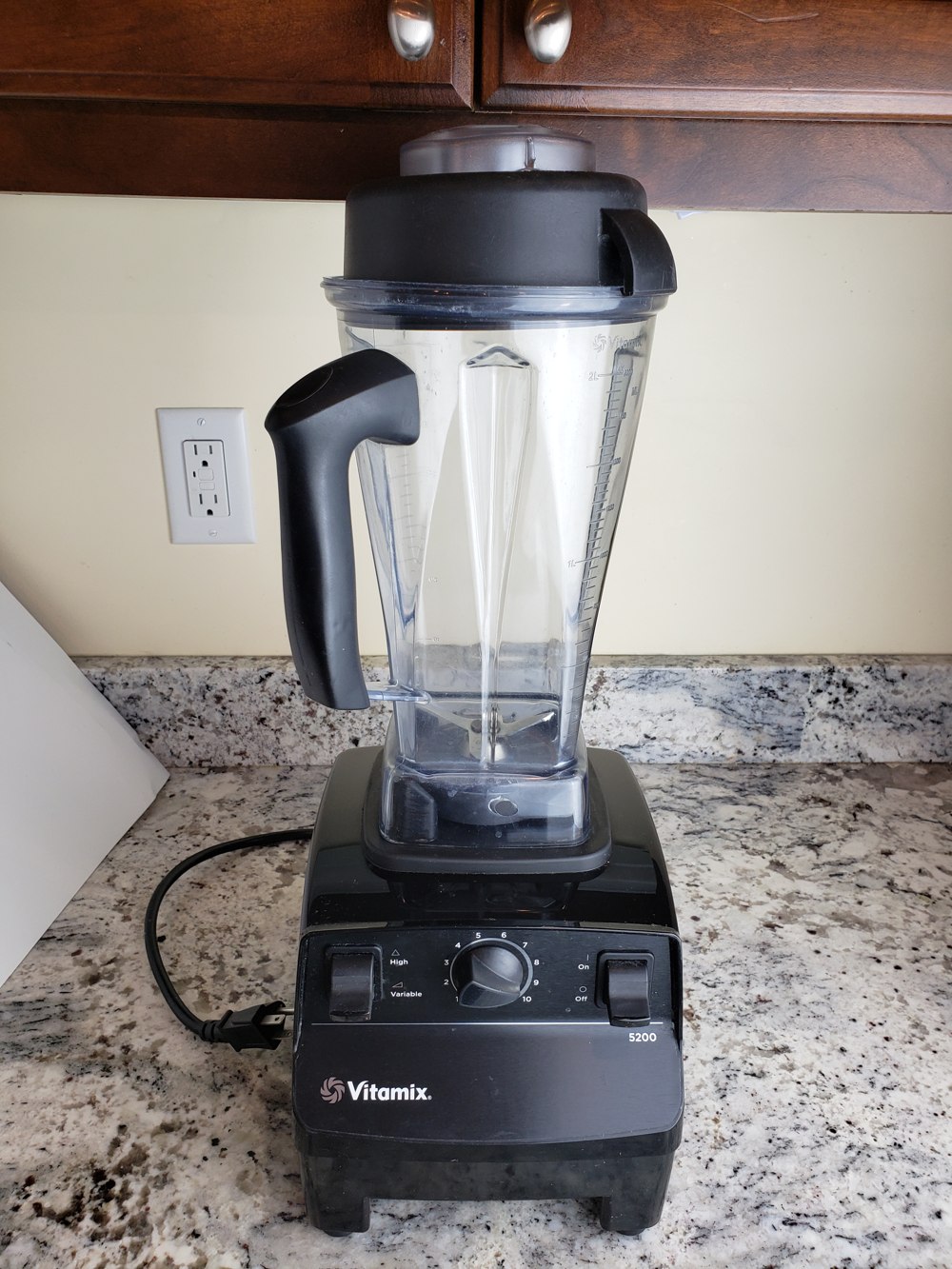
Vitamix Dry Grains Container vs. Regular Container: Do You Actually Need Both?
If you already own a Vitamix, you do not need to buy the Dry Grains Container just to try making flour.
Sources last checked November 13, 2026.
Vitamix specifically says its standard container can be used for occasional whole-grain grinding. The company recommends the Dry Grains Container when you plan to process larger quantities of whole grains into fresh flour.
Check your exact model's instructions first. The Vitamix ONE manual prohibits dry-grain grinding, so this advice does not apply to that model.
That distinction is more useful than treating the Dry Grains Container as either essential or pointless.
For an occasional batch of flour, your existing container may be all you need.
For someone who regularly mills wheat, rice or other grains, or wants to use a Vitamix for dough preparation, the specialized container starts making considerably more sense.
The reason is not simply that one container is labeled "dry." Its blades move ingredients differently.
Jump to a section
The short answer
You probably do not need both containers if you:
- only grind grains occasionally
- want to try making homemade flour before buying another accessory
- primarily use your Vitamix for smoothies, soups, sauces and other normal blending jobs
- have no regular bread-making or grain-milling routine
The Dry Grains Container becomes much easier to justify if you:
- grind whole grains frequently
- make substantial quantities of homemade flour
- regularly process other hard, dry ingredients
- want a container specifically designed around dry-material circulation
- plan to use Vitamix's dough-kneading method
Vitamix's own guidance draws almost exactly this line. It says occasional grain grinding is acceptable in the standard container, while recommending the Dry Grains Container for larger amounts of whole grains.
So there is little reason to buy a second container before you know you have a second job for it.
What actually changes inside the Dry Grains Container?
The biggest difference is the way the blade system moves ingredients.
A regular Vitamix container is designed to pull food downward through the blades. That circulation works well for the smoothies, soups, sauces, purees, frozen mixtures and other foods most people associate with a blender.
Dry grains behave differently.
With hard ingredients and little or no liquid, the goal is to keep the material circulating instead of allowing it to pack tightly beneath the blade.
Vitamix says the Dry Grains Container creates a reverse vortex. Its blades push dry ingredients upward and away from the blades to reduce packing.
That means the Dry Grains Container is not merely another 48-ounce jar with a different label. It is designed around a different type of ingredient movement.
On a small screen, swipe the table sideways.
| Regular Vitamix container | Dry Grains Container |
|---|---|
| Pulls ingredients down through the blades | Pushes dry ingredients up and away |
| General-purpose blending | Specialized dry processing |
| Smoothies, soups, sauces, purees and similar recipes | Whole grains, flour, dry ingredients and dough work |
| Can occasionally grind whole grains | Recommended by Vitamix for larger amounts of grain |
| Usually the container you need for everyday blending | Additional container for a more specialized job |
The important question is how often you actually need that specialized job.
Yes, a regular Vitamix can grind grain
This is where shoppers can easily spend money they did not need to spend.
Vitamix explicitly says it is okay to use the standard container if you only want to grind whole grains occasionally.
That means you do not have to buy a Dry Grains Container before finding out whether homemade flour is something you will actually continue making.
If you own a compatible full-size Vitamix and want to experiment with grinding wheat or another grain occasionally, the company's guidance gives you a reasonable way to start with the equipment you already own.
The older Vitamix container manual makes the distinction even clearer. It says the wet blade can grind grain and knead dough, but is not as efficient at those jobs as the dry blade.
That is a much more realistic description than saying a regular Vitamix either "can" or "cannot" mill grain.
It can.
The Dry Grains Container is designed to do it better.
When the regular container is probably enough
Suppose you buy whole wheat berries once every few months and grind enough flour for an occasional recipe.
Buying a separate container immediately may solve a problem you barely have.
The regular container already gives you a way to find out:
- whether you like milling your own flour
- how often you actually do it
- how much grain you normally process
- whether the results from your existing container satisfy you
That is useful information to have before adding another Vitamix accessory to the cabinet.
This is especially true if the rest of your Vitamix use involves smoothies, sauces, soups, nut butters and frozen foods. Your regular container already handles the jobs that dominate your routine.
A specialized dry container makes more sense after dry processing becomes a meaningful part of that routine.
When I would buy the Dry Grains Container
I would consider it when grain milling stops being an experiment and becomes something you do regularly.
Vitamix recommends the Dry Grains Container for processing large amounts of whole grains into fresh flour, and its current product information describes the container specifically for whole-grain and gluten-free flour, batter and thick yeast dough.
That makes frequent home baking the clearest use case.
If you are repeatedly grinding wheat, rice or other grains, the specialized blade movement has a job to do every time you use it.
The same logic applies if you frequently process spices or other hard, dry ingredients. Vitamix's current grinding guidance recommends the Dry Grains Container for dry ingredients including grains and spices.
It is not the occasional ingredient that makes the second container worthwhile.
It is repetition.
If you keep asking your general-purpose container to perform the same specialized dry job, then a container designed around that job becomes much easier to justify.
What about making bread dough?
The Dry Grains Container has another purpose that is easy to overlook.
Vitamix says its dry blade system is designed not only for grinding grains but also for simulating the kneading process.
The current Dry Grains product page specifically mentions mixing batter and kneading thick yeast dough for foods such as bread, pizza and soft pretzels.
A regular container is not completely incapable of dough work. Vitamix documentation says the wet blade can grind grain and knead dough, but is less efficient than the dry blade for those applications.
So once again, this is not an absolute capability difference.
It is a specialization difference.
Someone who makes bread frequently has a stronger reason to own the Dry Grains Container than someone who makes one loaf and then returns to smoothies for the next six months.
The Dry Grains Container does not replace your regular container
Buying a Dry Grains Container does not mean you should get rid of your normal Vitamix jar.
The two are designed for different jobs.
Vitamix's container instructions describe the wet blade container as the choice for liquids such as juices, frozen mixtures, sauces, soups and purees.
The dry blade container is intended for hard, dry materials and dough work.
That makes "Do I need both?" slightly misleading.
You need the regular container for the broad range of normal blending jobs.
The question is whether you also perform enough dry milling to justify adding the specialized one.
If the answer is yes, owning both makes sense because each has a distinct role.
If the answer is no, the regular container can remain your only container.
Sources: 3
A second container also means a second thing to store
Specialized accessories are easy to evaluate based only on what they can do.
You also have to store them.
Vitamix currently lists the 48-ounce Dry Grains Container at approximately:
- 6.5 inches deep
- 8 inches wide
- 10 inches high
It is not enormous, but it is another full-size blender container occupying cabinet or counter space.
That may be irrelevant in a large kitchen.
In a small kitchen, it is another reason not to buy the accessory "just in case."
A specialized container earns its storage space when you actually use the specialization.
Sources: 2
Could you dedicate a regular container to dry ingredients instead?
You could own more than one general-purpose container, but that does not recreate the Dry Grains blade system.
The key advantage of the Dry Grains Container is not simply keeping flour or spices separate from your smoothie container. Its blade design and circulation pattern are different.
Vitamix says the regular blades pull ingredients downward, while the dry blades push them upward and away to prevent grains from packing.
So if your goal is simply having a spare container, another regular container can accomplish that.
If your goal is getting the container Vitamix specifically engineered for frequent grain processing, you need the Dry Grains design.
Those are different reasons to purchase a second jar.
If you are choosing a spare general-purpose jar, our 48 oz. vs. 64 oz. Vitamix container comparison covers batch size and storage after compatibility is confirmed.
What about scratches and clouding from grinding grains?
There is another practical reason some owners may prefer a separate container.
An official Vitamix container manual notes that grinding grain in the wet container can mar it and make it cloudy.
That does not mean occasional grain grinding is prohibited. Vitamix's current FAQ still explicitly says the standard container can be used for occasional whole-grain grinding.
It does mean someone who intends to grind hard dry materials constantly may have another reason to separate that work from the container they use every day.
Cosmetic wear alone would not convince me to buy a second container for one or two batches of flour.
For frequent milling, it becomes part of the larger case for using the tool designed for the job.
Be careful with Dry Grains compatibility
Do not buy the current Dry Grains Container based only on the words "Vitamix" and "48 ounce."
Check your exact blender.
There is currently a documentation conflict on Vitamix's U.S. page for the 48-ounce Dry Grains Container with SELF-DETECT.
The feature section says the container can be used with all full-size Vitamix blenders, with SELF-DETECT functionality available only on Smart System machines.
On the same page, however, the product specifications list compatibility as Ascent & Venturist Series.
Those statements are not identical.
Because the manufacturer currently publishes both, I would verify the exact blender and current container listing before ordering rather than turning either statement into a universal compatibility rule.
If you have a 5200, Explorian, Ascent, Venturist or another Vitamix family and are unsure which current container belongs with it, start with our Vitamix container compatibility guide. It separates capacity from platform compatibility and documents the places where Vitamix's own current information conflicts.
Sources: 2
Don't confuse SELF-DETECT with the dry blade itself
SELF-DETECT is an electronic feature.
The Dry Grains design is a mechanical one.
On compatible Smart System machines, SELF-DETECT allows the blender to recognize the installed container and adjust available settings for its size.
That is separate from the reason the Dry Grains Container handles grains differently.
The dry-processing benefit comes from the container and blade design that creates the reverse vortex.
So when deciding whether you need a Dry Grains Container, focus first on what you plan to grind.
Then check which compatible version works with your blender.
Sources: 2
A simple way to decide
Before buying one, answer these questions.
1. Have you already tried occasional grain grinding?
If not, and your existing compatible Vitamix container can perform the job under Vitamix's instructions, start there.
You may discover that you make flour once and never do it again.
2. Are you regularly buying whole grains specifically to mill at home?
That makes the Dry Grains Container considerably easier to justify.
3. Are you making bread or dough frequently?
The Dry Grains system is designed for this use as well as flour milling.
4. Is your regular container doing everything you need?
If it is, another container is not automatically an upgrade.
5. Have you verified compatibility?
Do this before ordering, especially because Vitamix's current Dry Grains product page contains conflicting compatibility language.
My recommendation
For most existing Vitamix owners who are simply curious about homemade flour, I would not buy the Dry Grains Container first.
Try the occasional grain grinding that Vitamix says the standard container can handle. Find out whether milling grain becomes something you actually do.
If it does, and especially if you begin processing larger quantities of whole grains, making flour regularly or incorporating dough work into your routine, the Dry Grains Container becomes a sensible specialization rather than an unnecessary accessory.
That is the dividing line I would use.
Occasional grain grinding: keep using the regular container.
Frequent flour milling and dry processing: consider adding the Dry Grains Container.
You do not need two containers simply because Vitamix sells two containers.
You need two when you regularly have two different jobs for them.
Frequently asked questions
Can you grind wheat in a regular Vitamix container?
Yes. Vitamix says a standard container can be used for occasional whole-grain grinding.
For larger amounts of whole grains processed regularly into fresh flour, Vitamix recommends its Dry Grains Container.
What is different about the Vitamix Dry Grains blade?
The regular blade system pulls food downward through the blades.
According to Vitamix, the Dry Grains blade system pushes dry ingredients upward and away from the blades, helping prevent grains from packing underneath them.
Will grinding grains damage my regular Vitamix container?
Vitamix currently says occasional whole-grain grinding is acceptable in the standard container.
An official Vitamix container manual also notes that grinding can mar the wet container and make it cloudy. That is mainly a reason to consider a specialized container if dry grinding becomes frequent, not evidence that occasional grinding is prohibited.
Can the Dry Grains Container make smoothies and soup?
It should not be treated as a replacement for the regular wet container.
Vitamix's container instructions designate the wet container for liquid-heavy foods such as smoothies, juices, soups, sauces and purees, while the dry container is intended for hard, dry materials and dough.
Is the Dry Grains Container only for flour?
No.
Vitamix also identifies uses including spices, coffee, batter and dough. Its central purpose is processing dry ingredients using the specialized dry blade circulation pattern.
Does the Dry Grains Container fit every Vitamix?
Verify your exact model before purchasing.
Vitamix's current U.S. Dry Grains product page contains conflicting compatibility language. One section says the current 48-ounce SELF-DETECT container can be used with all full-size Vitamix blenders, while the specifications section lists Ascent and Venturist compatibility.
Check the current listing for your exact blender before ordering.
Sources & research notes
Sources checked November 13, 2026. This is a research-based buying guide, not a hands-on review. We checked Vitamix's current U.S. FAQ, Dry Grains product page, grinding guidance and official container manuals. The older container manual supports the wet/dry blade and clouding discussion, not universal compatibility. The current Dry Grains page still gives conflicting compatibility descriptions; confirm your exact pairing with Vitamix before ordering. Follow the operating instructions and limits for your exact blender and container.
- Vitamix FAQ: standard versus dry blades and occasional grain grinding (opens in new tab)
- 48-ounce Dry Grains Container with SELF-DETECT: uses, dimensions and conflicting compatibility language (opens in new tab)
- Vitamix Container Use and Care Manual: wet and dry blades, clouding and intended uses (pages 8 and 11) (opens in new tab)
- Vitamix grinding and milling guide: spices, grains, coffee and flour (opens in new tab)
- Vitamix ONE manual: dry-grain prohibition and model-specific container restriction (pages 3–6) (opens in new tab)