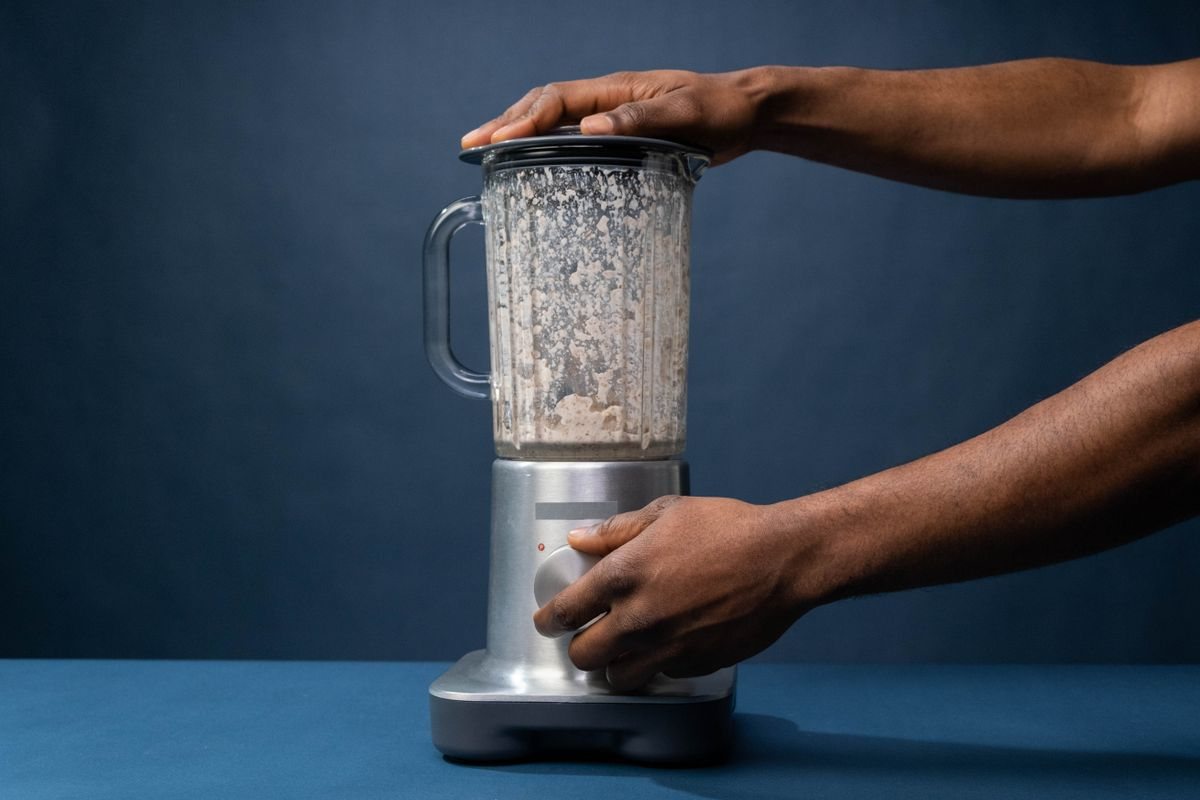
KitchenAid KFC3516 vs. Cuisinart DLC-2A: Which Mini Food Chopper Should You Buy?
A food chopper that handles an onion beautifully might be the wrong choice for grinding whole peppercorns. And a machine with a drizzle basin might be convenient for dressing without being the only one that can make it.
Sources last checked November 15, 2026.
That is what makes the KitchenAid KFC3516 and Cuisinart DLC-2A interesting to compare.
The KitchenAid gives you a 3.5-cup bowl, a locking multipurpose blade, Chop/Purée controls, and a lid designed for adding liquid while processing. The Cuisinart has a smaller 3-cup bowl, but its reversing blade provides separate Chop and Grind functions.
Our recommendation: Choose the Cuisinart DLC-2A if your small kitchen jobs include whole spices, peppercorns, or hard cheese. Its manufacturer explicitly documents those uses. Consider the KitchenAid KFC3516 if you mainly chop produce, make small sauces, and appreciate a handled bowl with a pouring spout and dedicated drizzle basin.
For garlic, onions, or fresh herbs alone, neither has an overwhelming advantage on paper. The price, controls, and cleanup routine may decide it.
We based this comparison on the manufacturers' product information and instructions. We have not personally tested the two machines against each other.
The differences that matter
On a small screen, swipe the table sideways.
| Detail | KitchenAid KFC3516 | Cuisinart DLC-2A |
|---|---|---|
| Advertised bowl capacity | 3.5 cups | 3 cups / 24 ounces |
| Processing blade | Stainless steel multipurpose blade | Auto-reversing stainless steel blade |
| Controls | Chop/Purée speed selection and Pulse/On | Separate Chop and Grind buttons |
| Hard spices such as nutmeg | Manufacturer specifically warns against processing them | Manufacturer provides hard-spice grinding instructions |
| Adding oil while running | Dedicated drizzle basin | Two lid openings; use one while leaving the other unobstructed |
| Bowl convenience | Handle, pouring spout, locking blade | Handled work bowl; spatula included |
| Cleaning | Bowl, lid, blade, and removable lid ring are top-rack dishwasher-safe | Bowl, lid, and blade assembly are dishwasher-safe according to the manual |
| Approximate assembled size | 7.0 W × 5.6 D × 8.7 H inches | 7 W × 5 L × 9.25 H inches |
| U.S. warranty | One-year full warranty | 18-month limited warranty |
| Included processing tools | One multipurpose blade; no slicing or shredding disc | One reversing blade; no slicing or shredding disc |
Sources: KitchenAid product page, manual, and manufacturer specification sheet; Cuisinart product page and manual.
The extra half-cup is not the whole story
KitchenAid advertises 3.5 cups against Cuisinart's 3 cups. That is an extra half-cup of nominal bowl volume, or about 17% more.
It sounds useful. But how much of that space can you actually use?
KitchenAid's instructions give different quantities for different jobs:
- Up to 3 cups of raw fruits or vegetables, cut into approximately 1-inch pieces.
- Up to 2.5 cups of cooked fruits or vegetables for puréeing.
- Up to 1.5 cups of liquids or emulsions, including mayonnaise and dressing mixtures.
- Up to half a pound of raw meat in one batch.
These are manufacturer recommendations, not results from our testing.
The liquid limit is particularly important. A 3.5-cup work bowl does not mean you should pour in 3.5 cups of salad dressing ingredients.
Cuisinart uses a different approach to capacity guidance. Its manual says not to overload the bowl and gives a practical reference point: processed food should not rise beyond approximately two-thirds of the height of the blade assembly's central hub. It also supplies ingredient-specific instructions and small-batch recipes.
That means the two machines' advertised cup counts cannot be treated as directly comparable working capacities for every recipe.
For one onion and a few garlic cloves, the extra half-cup is unlikely to be the deciding feature. When preparing several vegetables for a larger recipe, KitchenAid's documented 3-cup raw-produce batch allowance becomes more relevant.
Before purchasing, write down the quantity of your most common prep job. Compare that amount with the manual's actual recommendation, not the largest number printed on the box.
What are you making?
This is where the comparison becomes much more useful than measuring the bowls.
On a small screen, swipe the table sideways.
| Your regular task | What we would consider | Important check |
|---|---|---|
| Chopping onions | Either | KitchenAid recommends roughly 1-inch pieces; Cuisinart specifies smaller pieces for onions and short pulses. |
| Mincing garlic | Either | Both manufacturers explicitly support garlic. Stop before a fine mince becomes a paste. |
| Chopping fresh herbs | Either | Both support herbs. Cuisinart advises washing and thoroughly drying the leaves first. |
| Making pesto | Either, with stronger recipe documentation from Cuisinart | Cuisinart includes a specific pesto recipe yielding about half a cup. KitchenAid supports the component tasks of chopping herbs and nuts and adding oil, but that is not a tested head-to-head pesto comparison. |
| Making mayonnaise or dressing | KitchenAid for its dedicated drizzle-basin design; Cuisinart remains fully capable | KitchenAid specifies up to 1.5 cups of liquid or emulsion. Cuisinart permits oil through its lid while running. |
| Grinding whole peppercorns or nutmeg | Cuisinart | KitchenAid explicitly warns against hard spices such as nutmeg. Cuisinart supports them, although they may scratch its bowl or lid. |
| Processing hard Parmesan or Romano | Cuisinart has explicit instructions | Cuisinart's website and manual disagree about which control to use for hard cheese. Read the note below. |
| Puréeing cooked vegetables | Either | KitchenAid specifies a maximum of 2.5 cups of prepared cooked produce; Cuisinart supports small purées and gives recipes rather than one universal volume. |
The point is not that one chopper wins every row. It is that certain recipes create a genuine equipment difference, while others do not.
Chop/Purée and Chop/Grind are not interchangeable controls
The KitchenAid has a single stainless steel multipurpose blade. Its selection lever changes between chopping and puréeing speeds, while the Pulse/On control lets you use short bursts.
For chunky salsa, finely chopped onion, or herbs, those short bursts give you control over how far the ingredients are processed.
For a cooked-vegetable purée or small sauce, the higher-speed setting is intended to produce a finer mixture.
Cuisinart's buttons work differently.
Its patented blade changes rotation direction depending on the selected function:
- Chop: Uses the sharper cutting edge for softer ingredients, chopping, mixing, and puréeing.
- Grind: Uses the blunt edge for harder, drier ingredients such as peppercorns and whole spices.
That second function is the clearest reason to choose Cuisinart.
KitchenAid's manual specifically cautions against processing coffee beans and hard spices such as nutmeg because doing so could damage the machine. Yet it also lists herbs and spices as chopping ingredients. Those statements are not contradictory if you distinguish leafy herbs and suitable softer seasonings from hard whole spices.
We would not interpret KitchenAid's general herb-and-spice listing as permission to grind nutmeg or coffee beans.
Cuisinart's manual, meanwhile, gives actual operating guidance for peppercorns, cinnamon sticks, nutmeg, and several dried seeds.
It also cautions that grinding hard ingredients can leave scratches on the work bowl or cover. If you frequently switch between spices and wet sauces, that is worth knowing.
An operating detail: Cuisinart recommends supporting the Mini-Prep Plus with one hand while it runs. Its manual also instructs users not to operate it continuously for more than one minute at a time. Follow those directions when processing ingredients that take longer to break down.
One Cuisinart instruction needs clarification
Cuisinart's current product-page FAQ describes Grind as the setting for hard cheese.
However, the manufacturer's DLC-2A instruction manual lists Parmesan, Asiago, and Romano under Chop, with a recommendation of up to 3 ounces cut into small pieces.
The manual's pesto recipe also processes Parmesan using Chop.
These manufacturer instructions disagree on the button choice, although both agree that the appliance can process hard cheese.
For that reason, we would not promise that one button is universally correct for every hard-cheese preparation. Follow the instructions provided with the exact appliance, and contact Cuisinart if the discrepancy affects how you plan to use it.
The important buying distinction remains: Cuisinart documents hard-cheese processing, whereas KitchenAid's KFC3516 documentation does not establish the same specific use.
Both machines can make dressing
The KitchenAid's drizzle basin is easy to understand.
Put the thicker ingredients in the bowl, start processing, and add oil or another liquid through the basin in the lid. The opening is intended for gradual incorporation rather than requiring you to remove the cover.
KitchenAid also gives the bowl a spout for transferring the finished mixture.
That combination is appealing if you make small batches of mayonnaise, vinaigrette, or blended dressings regularly.
But it would be a mistake to say Cuisinart cannot do the same job.
The DLC-2A lid has two openings for adding liquid during operation. Its manual specifically discusses using them for mayonnaise and dressings.
The important instruction is to pour through one opening at a time, leaving the other available for air to escape.
Cuisinart even includes a pesto recipe that adds olive oil while the processor runs.
So the choice is about how the liquid-addition setup is designed, not whether either machine possesses the ability.
For a cook who regularly makes dressing, we can see why KitchenAid's dedicated basin and pouring spout might appeal. We cannot establish from the manuals that it creates a better emulsion or better-tasting dressing.
If you only make dressing occasionally, Cuisinart's lid openings may already do everything you need.
Think about the food you have to remove afterward
The cutting takes seconds for many small ingredients. Emptying the bowl and cleaning sticky food from it can take longer.
KitchenAid's work bowl has a handle, pouring spout, and blade that locks into place during assembly. Its product description emphasizes the convenience of that design when transferring ingredients.
The manual also provides instructions for unlocking and removing the blade safely before cleaning.
Cuisinart supplies a handled work bowl and a spatula. Its instructions tell you to wait until the blade has stopped, unplug the machine, and carefully remove the blade assembly before taking out food.
For sticky foods, Cuisinart explicitly advises stopping the machine and scraping ingredients from the bowl walls as necessary.
Neither design eliminates washing.
Both manufacturers permit dishwasher cleaning of their removable processing components, with top-rack directions in their manuals. Neither permits immersion of the electrical base.
There are a couple of small cleaning details:
- KitchenAid's removable lid ring can be taken off for more thorough cleaning when necessary.
- Cuisinart recommends rinsing the bowl, lid, and blade promptly after use, before food dries onto them.
We would treat both as manageable small-appliance cleaning routines, not claim one is objectively easier without using them.
Which one takes less counter space?
They are close enough in overall size that we would measure before making this the deciding factor.
KitchenAid's manufacturer specification sheet gives approximately 7 inches of width, 5.6 inches of depth, and 8.7 inches of height.
Cuisinart lists 7 inches wide, 5 inches long, and 9.25 inches high.
Using those published outer dimensions as rough rectangular envelopes, Cuisinart occupies a little less counter area. KitchenAid is slightly shorter.
Neither difference is dramatic.
What matters more is where you will put the machine after using it.
Measure:
- The shelf space available for the assembled appliance.
- The room you need above it to remove the lid and lift out the blade or bowl.
- Whether the power cord will stay out of the way.
- Whether you can comfortably assemble and clean the machine in that location.
KitchenAid provides a cord wrap around the base. Cuisinart provides cord storage underneath its base.
If your kitchen has very little free counter space, try placing a similarly sized object in the intended storage spot. The machine's published dimensions will not tell you how awkward it feels to retrieve it every evening.
Neither replaces a full-size food processor
These are small choppers with multipurpose blades.
They are not interchangeable with a full-size food processor that has dedicated slicing or shredding discs.
If your routine involves slicing potatoes evenly, shredding cabbage, or grating large amounts of cheese into shreds, choose a machine equipped for those jobs.
Cuisinart's ability to finely process hard cheese does not make its blade equivalent to a shredding disc.
Likewise, KitchenAid's 3.5-cup bowl should not be mistaken for a scaled-down version of every full-size food-processor function.
Our guide to whether the Cuisinart Custom 14 is too big for small batches explains when a larger processor earns its space through slicing and shredding capabilities.
If you are still deciding between categories of appliance, see our blender versus food processor guide.
Is the KitchenAid worth paying more for?
First, check whether it actually costs more.
Prices vary by retailer, promotion, and KitchenAid color variant. The price shown for one KFC3516 suffix may not match another.
There is no reason to pay a premium merely because 3.5 is greater than 3.
The KitchenAid's value comes from the work-bowl design, its pouring spout, locking blade, and the dedicated liquid-addition basin. Those may matter if you frequently make sauces and dressings or prepare raw vegetables in batches that fit KitchenAid's documented limits.
Cuisinart offers a different kind of versatility. It has explicit instructions for hard whole spices and hard cheese, along with a longer stated limited-warranty period.
If your main tasks are onions, garlic, and fresh herbs, check the complete purchase cost, including shipping and applicable tax. Either machine covers those jobs according to the manufacturers.
If hard spices are part of your regular cooking, the Cuisinart is the better-supported choice regardless of a modest difference in bowl size.
Our final recommendation
We would start with the Cuisinart DLC-2A for someone who wants one compact appliance for garlic, onions, fresh herbs, hard spices, small purées, and occasional dressings.
Its Grind capability covers ingredients that KitchenAid explicitly cautions against. Its instruction manual also provides detailed preparation guidance and real small-batch recipes.
The KitchenAid KFC3516 makes more sense for someone whose routine is primarily soft ingredients, chopped vegetables, and sauces, especially if the dedicated drizzle basin, locking blade, and pouring spout fit the way they cook.
Neither choice turns a mini chopper into a full-size processor. And if you only chop a clove of garlic once in a while, a knife may still be the most convenient tool.
The question we would ask before ordering is simple:
Which recipe would make you reach for this appliance three times next week?
If the answer involves whole peppercorns or nutmeg, choose Cuisinart. If it involves repeated small batches of dressing and chopped produce, take a closer look at KitchenAid.
If both answers sound equally likely, compare the current total delivered prices and pick the controls you would rather use.
Check the exact models
KitchenAid 3.5-Cup Food Chopper, KFC3516 family
View the manufacturer's KFC3516OB product information
Check that the listing identifies KFC3516, the included drizzle-basin lid, and the exact color suffix. Do not confuse it with the 5-cup KFC0516 or refurbished RKFC3516 models.
Cuisinart Mini-Prep Plus, DLC-2A
View the manufacturer's DLC-2A product information
Check that it is the 24-ounce Mini-Prep Plus with the auto-reversing blade. Other Mini-Prep capacities and suffixes are not automatically identical listings.
Prices, availability, shipping, and return terms can change. Confirm them with the seller before purchasing.
Sources
Sources checked November 15, 2026.
- KitchenAid KFC3516 official product page (opens in new tab)
- KitchenAid KFC3516 Use and Care Guide (opens in new tab)
- KitchenAid manufacturer-authored KFC3516 specification sheet (opens in new tab)
- Cuisinart DLC-2A official product page (opens in new tab)
- Cuisinart DLC-2A Instruction and Recipe Booklet (opens in new tab)
Research disclosure: This article compares published specifications, manufacturer instructions, and documented recipes. It does not report personal ownership or independent performance tests.